Follow the numbered order with a torque wrench and the vehicle manufacturer’s procedure.
For other bolt counts, follow the vehicle handbook.
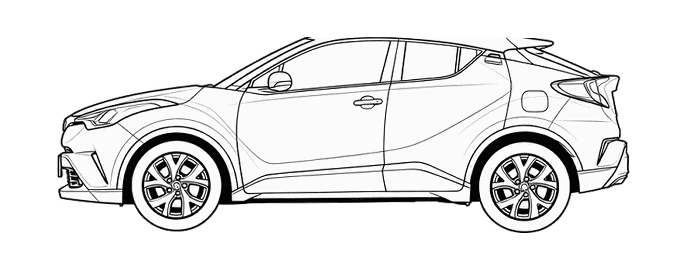
Wheel Nut Torque
For the Honda C-HR 2022, the recorded wheel tightening setting on this page is 108 Nm. Use that setting only for the matching wheel and fastener specification, following the fitting checks below.
Wheel nuts or bolts clamp the wheel securely to its hub. Too little torque can allow movement and loosening; too much can damage threads, stretch fasteners or distort components. Tighter is not always safer.
Whenever a wheel is removed and refitted, its fasteners need tightening to the correct specification before driving. This includes tyre replacement, puncture repairs, seasonal wheel changes and brake work involving wheel removal.
If a wheel was tight or seized on the hub, inspect the locating area and both mating faces before refitting. Remove corrosion, grit and loose debris using the manufacturer’s recommended method. The wheel must sit squarely and flush against its mounting face, without trapped material or a gap. If it will not seat correctly, stop and have the fit checked.
A torque wrench reaching its setting does not prove that a poorly seated wheel is secure. If trapped material compresses or the wheel settles fully onto the hub during driving, clamping force can be lost and the fasteners can loosen. Correct seating must come before final tightening; a later recheck is not a substitute.
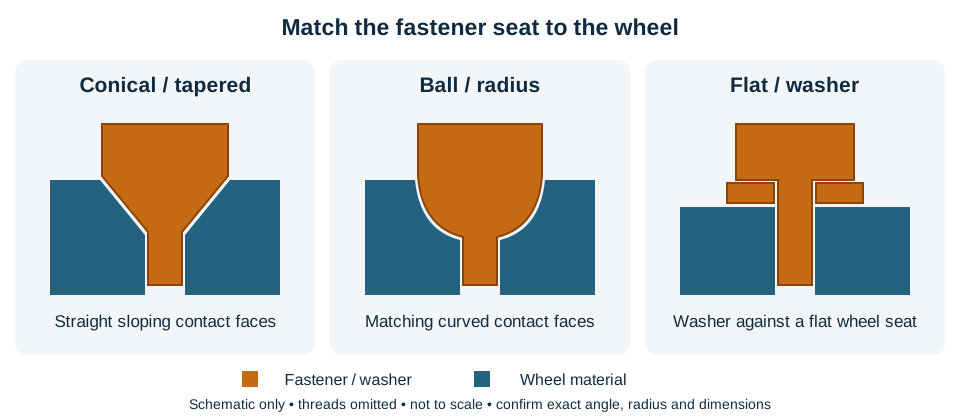
Replacement fasteners must suit the actual wheel fitted, including aftermarket and spare wheels. Matching the thread alone is not enough: check the thread diameter and pitch, bolt or shank length, required thread engagement and seat design against the vehicle and wheel specifications.
These seat types are not interchangeable. An incorrect seat can make only partial contact, damage the wheel and leave it insecure even when the torque wrench reaches its setting. Aftermarket wheels may need different fasteners from the original wheels. Check locking nuts or bolts in the same way.
Have damaged threads, distorted seats, severe corrosion or suspected stretched fasteners assessed and replace them with the correct approved parts. Start fasteners by hand; do not force a binding thread. Confirm that bolts cannot bottom out or foul components and that nuts have the required engagement before final tightening.
Use a suitable torque wrench and the vehicle manufacturer’s procedure. The numbered diagram shows a cross or star sequence to distribute the clamping force evenly. Confirm the specification for your exact wheels and fasteners in the vehicle documentation.
A follow-up check confirms that the fasteners remain at the specified torque after the wheel has settled in use. Re-torquing means checking the correct setting, not adding extra tightness. Follow the vehicle manufacturer’s and your fitter’s recheck instructions. Ask your fitter when the follow-up check is due for your vehicle and wheel system; there is no single interval that should be assumed correct for every installation.
These seating checks also matter on vans and light commercial vehicles up to 3.5 tonnes gross vehicle weight. Where twin rear wheels share one set of fasteners, the joint includes both the hub-to-inner-wheel contact and the inner-to-outer-wheel contact. Inspect both sides of the inner wheel’s mounting disc, the matching outer-wheel face and the hub face. All must be clean, sound and seated correctly.
There are additional interfaces where corrosion, grit or unsuitable paint build-up can prevent full contact. Material trapped between either wheel can compress or move after fitting, reducing the clamping force holding the assembly together. Use the approved wheel combination and correct fasteners; do not compensate for poor seating, vehicle load or twin wheels by adding extra torque.
Follow the instructions for the exact vehicle, axle and wheel system, including any specified lubrication points and post-fitting torque checks. Do not apply grease or anti-seize to threads or clamping faces unless that procedure expressly requires it. Twin-wheel systems can have different recheck requirements, so a passenger-car interval must not be assumed to apply. Do not exceed the vehicle, axle, wheel or tyre load limits.