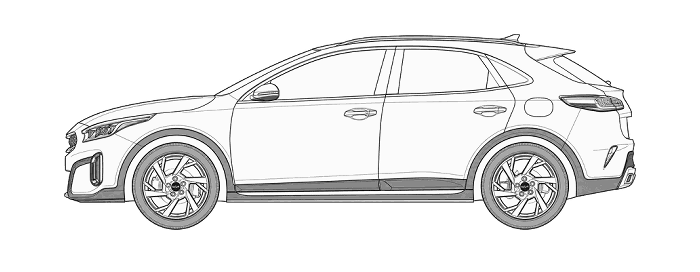
Kia XCeed 2019 to 2024
TPMS Reset / Tyre Pressure Monitor
Kia XCeed Reset Tyre Monitor / Calibration

TPMS reset procedure You should reset TPMS in below situations.• After repairing or replacing tires (or wheels)• After rotating tires• After adjusting tire pressure• When the low tire pressure indicator illuminates• After replacing suspension or ABS system1. Park the vehicle on a level, firm surface.2. Inflate the tires to the proper pressure as indicated on the vehicle's placard or tire inflation pressure label located on the driver's side center pillar outer panel.3. Starting the engine, press and hold the TPMS SET button for about three seconds to reset TPMS.4. Then check that the low tyre pressure indicator turns off after blinking for four seconds. In case of supervision cluster, check that"Tire pressures stored" message is shown on the cluster.5. After resetting the TPMS, drive the vehicle for approximately 20 minutes to store the new tyre pressure in the system.* If the low tire pressure indicator turns on repeat step 3. When resetting TPMS, the current tyre pressure is stored as a standard tyre pressure.Tire pressure monitoring system (TPMS) The TPMS on this vehicle monitors and compares the rolling radius and rotational characteristics of each wheel and tire while you are driving and it checks whether any tire is significantly under-inflated. You should reset the system by pushing the TPMS SET button according to the procedure and this will store the current tire pressure. After that, if one or more tires are significantly under-inflated, the low tire pressure indicator illuminates and a message is shown on the cluster. Also, if there is a malfunction with the TPMS, the TPMS malfunction indicator will illuminate.
Manufacturer Year: 19 - 24 · Tyre Size: 205/60R16
Before resetting the tyre pressure monitor: Kia XCeed
Check the tyres first
A reset does not repair a puncture or restore lost air. Check all tyres and set the correct cold pressures before following the reset instructions. If a tyre repeatedly loses pressure, have the cause investigated rather than repeatedly clearing the warning.
Follow the correct system procedure
Vehicles use different monitoring systems. Some store a reference after adjustment, while others use pressure sensors and may need a relearn procedure. Follow the instructions for this vehicle; a menu sequence from another model may not apply.
If the warning returns
Recheck the pressures and inspect for damage. A persistent or flashing warning can indicate a system fault as well as a pressure issue; use the vehicle handbook to identify it. TPMS does not replace routine manual pressure checks.