How to Check Your Tyre Pressures
Correct tyre pressures support safe braking, predictable handling, even tyre wear and efficient driving. This guide explains where to find the right figures and how to check and adjust each tyre.
Tyre Pressure Checking Video
First, Find the Correct Tyre Pressures
The front and rear tyres may require different pressures. Some vehicles also specify different settings for normal use and for carrying heavier loads.
Check the vehicle label
Look inside the driver or passenger door opening, on the door pillar or inside the fuel-filler flap.
Read the owner’s handbook
The handbook should explain the correct pressures for the fitted tyre sizes and different loading conditions.
Use the vehicle index
If you cannot find the label or handbook, use our tyre-pressure vehicle index as a helpful reference.
Do not use the maximum pressure shown on the tyre sidewall as the normal setting. Follow the vehicle manufacturer’s recommendation for the tyre size, load and operating conditions.
How to Check and Adjust the Pressure
- 1
Check when cold
Measure before driving or after the vehicle has been parked long enough for the tyres to cool. Pressure rises as tyres warm during use.
- 2
Remove the valve cap
Unscrew the dust cap and keep it somewhere safe while you take the reading.
- 3
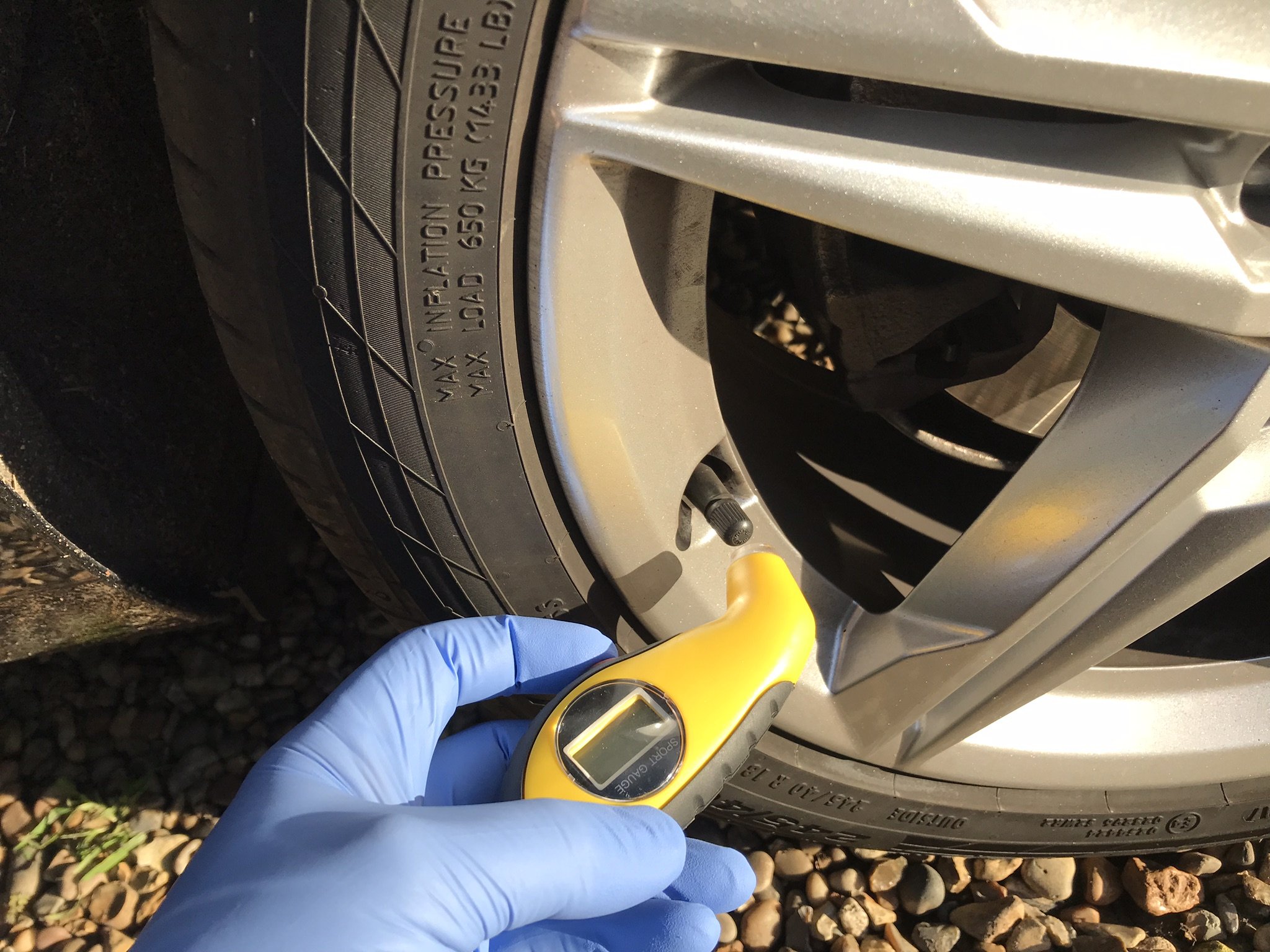
Attach the gauge firmly
Press the gauge squarely onto the valve until it seals. A brief hiss is normal, but continued hissing means the connection needs repositioning.
- 4
Read and compare
Compare the measured PSI, Bar or KPA with the recommended cold pressure for that axle and load.
- 5
Add or release air
Inflate if the reading is low. If it is high, use the gauge’s release control or a suitable deflator, working in short bursts and rechecking regularly.
- 6
Finish every tyre
Recheck the final reading, replace the valve cap and repeat for every road wheel. Check a usable spare wheel too.
What Do You Need?
- A reliable digital or analogue tyre-pressure gauge
- A foot pump, 12-volt inflator or suitable compressor when air is needed
- The vehicle’s recommended cold-pressure figures
- A methodical approach so no tyre is missed
Fuel-station inflators can also be useful. Check the displayed units before entering the required pressure, and confirm the result with your own trusted gauge if possible.
If the same tyre repeatedly loses pressure, arrange an inspection rather than continuing to top it up.
Passengers, Luggage, Towing and Long Journeys
Use the listed loaded setting
If the vehicle label or handbook provides a higher pressure for extra passengers, luggage, towing or sustained high-speed driving, use that specific setting when those conditions apply.
Check before the journey
You can check a loaded vehicle, but it is best to take the pressure reading while the tyres themselves are still cold. Never exceed the vehicle or tyre load limits.
Tyre Pressure FAQs
How often should I check tyre pressures?
Check them regularly and before long journeys. Monthly checks are a useful minimum habit, with additional checks after major temperature changes.
Why is a warm reading higher?
Driving flexes and warms the tyre, which raises the pressure. This is why manufacturers normally specify pressures for cold tyres.
What if the pressure warning light stays on?
Check all tyres and follow the vehicle’s reset procedure if appropriate. See our guide on what to do when the tyre-pressure warning light appears.
Does cold weather change tyre pressure?
Yes. Colder air can lower the reading. Our cold-weather pressure guide explains what to adjust.
Need Help With a Tyre in Norwich?
For mobile tyre fitting, puncture assistance or emergency roadside tyre replacement, contact Pure Tyre with your location and tyre details.