Should You Adjust Tyre Pressure in Colder Weather?
Cold temperatures can reduce the pressure shown in your tyres, but you should normally restore them to the vehicle manufacturer’s recommended cold-tyre setting—not inflate them far above it.
Always use the pressure label inside the vehicle or the owner’s handbook. Do not use the maximum pressure printed on the tyre sidewall as your everyday setting.
Why Tyre Pressure Drops When It Gets Colder
Temperature changes pressure
Air contracts as it becomes colder, so a tyre can display a lower pressure even when it has no puncture or leak.
Restore the correct setting
If the reading is below the vehicle’s recommended cold pressure, add enough air to return it to that setting.
A large drop needs checking
A sudden or repeated pressure loss may indicate a puncture, damaged valve, wheel problem or another fault requiring inspection.
How to Check Tyre Pressures in Winter
- 1
Find the correct pressures
Look for the vehicle’s pressure label, often inside a door opening or fuel flap, or check the owner’s handbook.
- 2
Check the tyres when cold
Measure before a journey or after the vehicle has been parked long enough for the tyres to cool.
- 3
Use the correct load setting
Some vehicles list different pressures for normal driving and for a fully loaded vehicle. Select the setting that matches your use.
- 4
Adjust and recheck
Add or release air as required, replace every valve cap and confirm the final readings with the gauge.
Useful habit: Check all four tyres regularly and before long journeys. If the vehicle has a usable spare wheel, check that as well.
What About Winter Tyres?
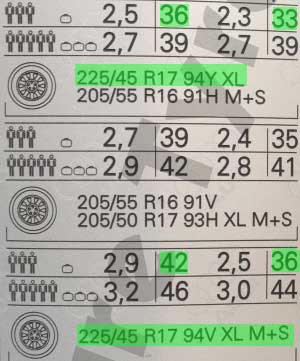
Vehicle manufacturers generally do not provide a separate winter pressure for ordinary summer tyres. However, some vehicles list a slightly different pressure for approved winter tyres.
Winter tyres may be identified by markings such as M+S and, depending on the tyre, the three-peak mountain snowflake symbol. In the example shown, the vehicle label lists a modest increase for the relevant winter-tyre sizes.
Only use a different pressure when it is specified by the vehicle manufacturer for your tyre size and operating conditions. A suggestion to jump from 30 PSI to 50 PSI simply because the weather is colder should not be followed unless 50 PSI is genuinely the manufacturer’s stated setting for that vehicle and load.
Common Tyre-Pressure Mistakes to Avoid
Using the tyre sidewall figure
The sidewall usually shows a maximum pressure or load-related marking for the tyre itself. It is not the normal operating pressure chosen by the vehicle manufacturer.
Checking immediately after driving
Tyres warm during use and their pressure rises. Comparing a warm reading with a cold-pressure recommendation can give a misleading result.
Ignoring repeated pressure loss
Continually topping up the same tyre without investigating can conceal a puncture, leaking valve or wheel-sealing problem.
Forgetting load differences
When carrying extra passengers or luggage, use the loaded-vehicle pressures if the vehicle label or handbook specifies them.
Cold-Weather Tyre Pressure FAQs
Should I deliberately overinflate tyres in winter?
No. Inflate to the pressure specified by the vehicle manufacturer for the fitted tyre size, load and tyre type.
Why did my warning light appear on a cold morning?
The temperature-related pressure drop may have taken one or more tyres below the monitoring system’s threshold. Check every tyre rather than simply resetting the warning.
Where can I find my vehicle’s setting?
Check the label inside a front door opening, the fuel flap or the owner’s handbook. Our vehicle tyre-pressure index may also help.
How do I check pressures correctly?
See our complete guide explaining how to check tyre pressures and what equipment to use.
Need Help With a Tyre in Norwich?
For mobile tyre fitting, puncture assistance or emergency roadside tyre replacement, contact Pure Tyre with your location and tyre details.